

Table of Contents
- Why Durable Outdoor Apparel for Plus Sizes Matters
- Outdoor Clothing Fit and Sizing: Getting the Right Fit
- Durable Hiking Clothes: Fabric and Construction That Lasts
- Plus-Size Hiking Pants and Leggings: Comfort Meets Function
- Tops and Base Layers for Extended Sizes
- Care, Repair, and Extending Garment Life
- Frequently Asked Questions
Last Updated: October 14, 2026
Why Durable Outdoor Apparel for Plus Sizes Matters
Finding durable outdoor apparel for plus sizes that withstands trail conditions is harder than it should be. Most brands treat extended sizing as an afterthought, stretching patterns not designed for different body shapes.
At Tortoise Trail Gifts, we believe adventurers in plus sizes deserve apparel built to last. Durability comes down to three things: fabric quality, construction methods, and design that accounts for how clothing moves on different body types.
This guide covers what makes outdoor apparel durable, how to find pieces that fit your body and activities, and how to extend the life of gear you own.
Outdoor Clothing Fit and Sizing: Getting the Right Fit
Understanding Size Charts and Body Measurements
The biggest mistake when buying durable outdoor apparel for plus sizes is relying on vanity sizing. A brand's XL doesn't mean the same thing across companies, one may fit comfortably while another is tight through the shoulders and chest.
Before ordering, measure yourself using a soft measuring tape:
- Chest: measure around the fullest part of your chest, keeping the tape parallel to the ground
- Waist: measure at your natural waistline, where your body naturally bends
- Hips: measure around the fullest part of your hips
- Sleeve length: from the center back neck, across the shoulder, down to your wrist with your arm slightly bent
- Inseam: from your inner thigh down to your ankle
Compare your measurements to the brand's size chart, not the size you typically wear. If a chart lists a 46-inch chest for an XL and you measure 45 inches, that XL fits; at 48 inches, size up.
Keep your measurements in your phone so online shopping takes 30 seconds of matching numbers instead of guessing.
Fit Across Different Activities and Body Shapes
Durable outdoor apparel for plus sizes needs to account for how different activities require different fits, a shirt that works for trail walking may be too loose for climbing, and casual-walk pants may restrict scrambling.
Consider your primary activity when choosing fit:
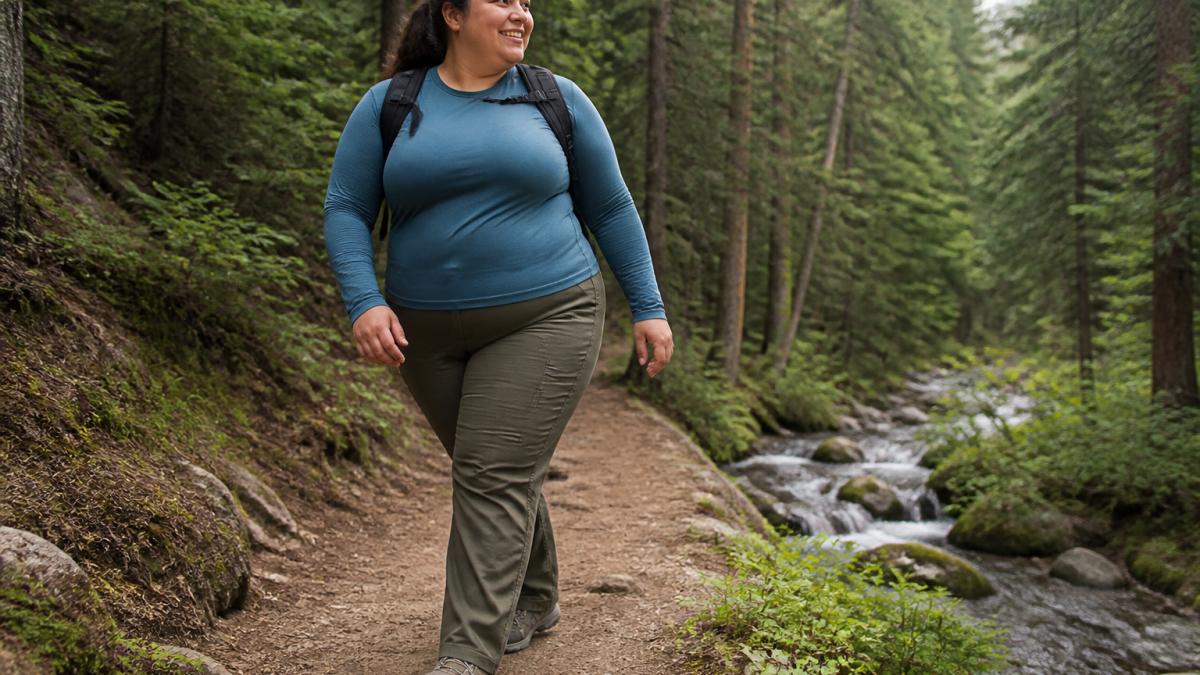
- Hiking and trail walking: Look for a relaxed fit through the torso with some taper at the waist. You want enough room to layer without excess fabric bunching when you move. Seams should sit slightly away from your body, not pulling across your back or chest.
- Climbing and scrambling: Fit should be closer to your body but still allow full range of motion in your shoulders and hips. Excess fabric creates snag points on rock and limits your ability to feel your body position.
- Camping and casual outdoor time: A looser fit works well here. You're not pushing your body to its limits, so comfort and layering flexibility matter more than a precise fit.
Body shape affects seam alignment. With a larger midsection, choose a higher rise, low-rise pants gap at the back and slide down during activity.
Durable Hiking Clothes: Fabric and Construction That Lasts
Moisture-Wicking and Quick-Drying Materials
Fabric determines how long your gear lasts. Moisture-wicking materials pull sweat from your skin, keeping you comfortable and reducing fiber breakdown from prolonged moisture exposure.
Quality moisture-wicking fabrics include:
- Merino wool: Naturally moisture-wicking, temperature-regulating, and antimicrobial. It resists odor even after multiple days of wear. Merino holds up well over time if you wash it gently. Avoid high heat, which can damage the fibers.
- Synthetic blends (polyester, nylon, spandex): These dry quickly and handle frequent washing better than natural fibers. Look for blends that include at least 15% spandex for stretch and durability. Pure polyester without stretch can feel stiff and uncomfortable.
- Wool blends: A mix of merino wool and synthetic fibers gives you the benefits of both. You get natural odor resistance and temperature regulation from wool, plus the durability and quick-dry speed of synthetics.
Avoid 100% cotton for hiking and camping. It absorbs moisture, dries slowly, makes you cold in cool weather and uncomfortable in warm weather, and breaks down faster when wet and repeatedly washed.
Quick-drying matters because wet fabric breaks down faster: seams degrade, elastic loses stretch, and zippers corrode. Fabrics that dry in hours instead of overnight extend the life of every piece in your kit.
Reinforced Seams and Abrasion Resistance
Seams fail first on most outdoor apparel. An unreinforced seam gives way after 20-30 washes or one season of regular use; reinforced seams last for years.
Look for these construction details:
- Flat-felled seams: The seam allowance is folded and stitched down flat. This creates a strong, durable seam that resists tearing and doesn't catch on skin. Flat-felled seams are standard on quality outdoor pants.
- Double-stitched seams: The seam is sewn twice, creating redundancy. If one stitch line fails, the second holds. This is especially important on high-stress areas like crotch seams and armholes.
- Reinforced stress points: Pocket corners, zipper attachment points, and seams under the arms should have extra stitching or reinforcement patches. These areas experience the most strain.
Abrasion resistance prevents fabric from wearing thin where it rubs against rock, branches, or pack straps. Heavier fabrics resist abrasion better, 500-denier nylon outlasts 300-denier, but heavier isn't always better: a poorly constructed 500-denier fabric fails faster than a 350-denier fabric with reinforced seams and quality stitching.
Check the care label: quality outdoor apparel often requires cold water and gentle cycles, a sign the brand invested in fabrics that perform better on the trail.
Plus-Size Hiking Pants and Leggings: Comfort Meets Function
Key Features to Look For
Plus-size hiking pants and leggings designed for durability share specific features that standard-size gear often skips. A quality pair should have:
- Gusseted crotch: An extra panel of fabric that extends from the front waistband to the back. This eliminates the seam that normally runs between your legs, which is the most common failure point on pants. Gusseted crotches are standard on climbing pants and quality hiking pants.
- Articulated knees: The fabric is cut and sewn to follow the natural bend of your knee. This prevents excess fabric from bunching and reduces stress on seams. Look for a slight forward curve at the knee, not a straight leg.
- Tapered ankles: A narrower opening at the ankle keeps fabric from dragging on the ground and catching on brush. The taper should be gradual, not sudden, so you can still pull the pants on and off easily.
- Zippered pockets: Regular pockets can lose items on the trail. Zippered pockets keep your phone, keys, and map secure. Cargo pockets with zippers are even better for keeping frequently accessed items accessible without opening your main pack.
- Adjustable waistband: A drawstring or elastic adjustment lets you fine-tune the fit. This is especially important if you're between sizes or if your fit changes with the season.
Hiking leggings should share these features: a high waist that won't slip, a gusseted crotch, and pockets where available. Without pockets, choose a secure waistband that won't shift under a pack.
Layering and Weather Protection
Durable outdoor apparel for plus sizes means building a layering system, not buying one perfect jacket, you adjust to changing conditions without carrying excessive weight.
Your layering system should include:
- Base layer: Moisture-wicking material against your skin. This can be a lightweight merino wool shirt or a synthetic blend. The base layer's job is to move sweat away from your skin, not to provide warmth.
- Insulating layer: A fleece or wool mid-layer that traps warm air. This provides warmth without bulk. Look for fleece with a brushed interior, which feels softer and warmer than smooth fleece.
- Weather protection layer: A water-resistant or waterproof outer shell. Water-resistant means water beads on the surface but will eventually soak through if you're out long enough. Waterproof means water doesn't penetrate. Waterproof is better for serious rain, but water-resistant is lighter and more packable for occasional showers.
Each layer should fit well worn together. Try on your base layer with the insulating layer, then add the shell, enough room to move, without excess fabric that creates bulk and restricts movement.
Water-resistant coatings last 3-5 years with proper care. Wash your shell in cool water without fabric softener, which breaks down the coating, and dry on low heat or air dry to extend its life significantly.
Tops and Base Layers for Extended Sizes
Quality base layers and outdoor shirts for plus sizes should meet the same durability standards as pants. A shirt with flat-felled seams outlasts one with simple overlocked seams.
Look for these features in outdoor tops:
- Reinforced underarm seams: The armhole is where shirts experience the most stress. Reinforced seams here prevent tearing and extend the life of the shirt by years.
- Thumb loops on sleeves (optional but useful): A small loop that goes over your thumb keeps sleeves from riding up when you layer. This is especially helpful if you're wearing a long-sleeve base layer under a jacket.
- Flatlock seams: Instead of a raised seam, the fabric is stitched flat against your skin. This prevents chafing during long hikes and reduces bulk under layers.
- Tagless construction: Seams are flat or the tag is printed directly on the fabric. Regular tags can irritate your skin during activity.
Extended-size tops need proportional sleeve lengths, many brands extend the chest and waist but keep standard sleeves.
Quality outdoor shirts cost more than basic athletic wear, but the difference is construction and fabric. Calculate cost-per-wear: an $80 shirt worn 100 times is $0.80 per wear; a $40 shirt worn 40 times before failure is $1 per wear.
Care, Repair, and Extending Garment Life
Your durable outdoor apparel for plus sizes will last longest with proper care. This isn't complicated, but it matters.
Wash outdoor apparel in cold water on a gentle cycle, hot water breaks down elastic and water-resistant coatings.
Dry on low heat or air dry. High heat damages elastic, melts synthetics, and breaks down water-resistant coatings.
Store gear cool and dry, sunlight fades colors and degrades fabrics, and humidity encourages mold.
Minor repairs extend apparel life dramatically.
Zippers fail occasionally.
Frequently Asked Questions
What should I look for in durable plus-size outdoor apparel?
Prioritize reinforced seams, moisture-wicking fabrics, and abrasion-resistant materials. Check that extended size ranges include accurate measurements and size charts. Look for brands offering flexible fits with stretch fabrics and adjustable features like elastic waistbands. Water-resistant or waterproof coatings protect against weather, while breathable construction prevents overheating. Verify that stitching is secure at stress points like pocket corners and seams. Quality outdoor apparel for plus sizes combines durability with comfort, allowing full freedom of movement during hiking and camping.
How should hiking clothes fit for comfort and movement?
Hiking clothes should allow full range of motion without binding or excess fabric. Pants and leggings should sit comfortably at the waist without requiring a belt, with enough room through the thighs and hips for crouching and climbing. Tops should have enough sleeve length and shoulder room to prevent pulling when reaching overhead. Layering requires slightly loose-fitting base layers to trap warmth while allowing moisture to escape. Test movement by squatting, reaching, and bending before purchasing. Body measurements matter more than standard sizing, so use detailed size charts to compare your measurements to the garment's dimensions rather than relying on size numbers alone.
Which fabrics hold up best for durable hiking clothes?
Nylon and polyester blends offer excellent durability and moisture-wicking properties for plus-size hiking apparel. Merino wool provides natural temperature regulation and odor resistance. Spandex or elastane adds stretch for comfort and freedom of movement. Look for ripstop fabrics in high-wear areas like pants, which resist tearing even after snagging on brush or rock. Water-resistant treatments like DWR (durable water repellent) coating protect against rain without compromising breathability. Tightly woven fabrics resist pilling and abrasion better than loose weaves. Quality construction matters as much as fiber content: reinforced seams and double-stitching at stress points extend garment life significantly.
How can I make outdoor clothing last longer?
Wash outdoor apparel inside out in cold water with mild detergent to protect prints and reduce fading. Avoid fabric softeners and bleach, which damage water-resistant coatings and elastic fibers. Air-dry whenever possible; high heat damages synthetic fabrics and elastic. Repair small tears and loose seams immediately with matching thread or seam tape to prevent larger damage. Store in a cool, dry place away from direct sunlight. Rotate between multiple outfits to reduce wear on any single garment. Refresh water-resistant coatings annually with DWR treatment spray. Proper care extends the lifespan of durable outdoor apparel by years, improving cost-per-wear and reducing the need for frequent replacement.
0 comments