

Table of Contents
- Twisted Compass vs Covenant Huntsman: An Overview
- Feature Comparison Table: Camo, Warmth, and Weather Protection
- Twisted Compass: Strengths, Weaknesses, and Best Use Cases
- Covenant Huntsman: Strengths, Weaknesses, and Best Use Cases
- Christian Outdoor Apparel: How Faith-Based Brands Compare
- Hiking Shirts and Hoodies: Fit, Layering, and Durability
- Outdoor Gifts for Hikers: Matching Gear to the Person
- Gift Ideas for Casual Trail Hikers: Simple, Useful Picks
- Frequently Asked Questions
Last Updated: October 14, 2026
Twisted Compass vs Covenant Huntsman: An Overview
Choosing between Twisted Compass and Covenant Huntsman comes down to one question: do you want a hunting-focused technical shell, or a faith-forward everyday outdoor brand? This comparison of Twisted Compass vs Covenant Huntsman breaks down camo patterns, warmth, weather protection, and value so you can pick the right one. At Tortoise Trail Gifts, we hear from shoppers who want gear that works on the trail and reflects their values.
Both brands sit in the Christian outdoor apparel space, and both lean on camo and nature-inspired designs. The difference is in the details: how each brand cuts its garments, what it prioritizes in fabric, and who it's really built for.
U.S. Fish and Wildlife Service hunting and outdoor recreation data
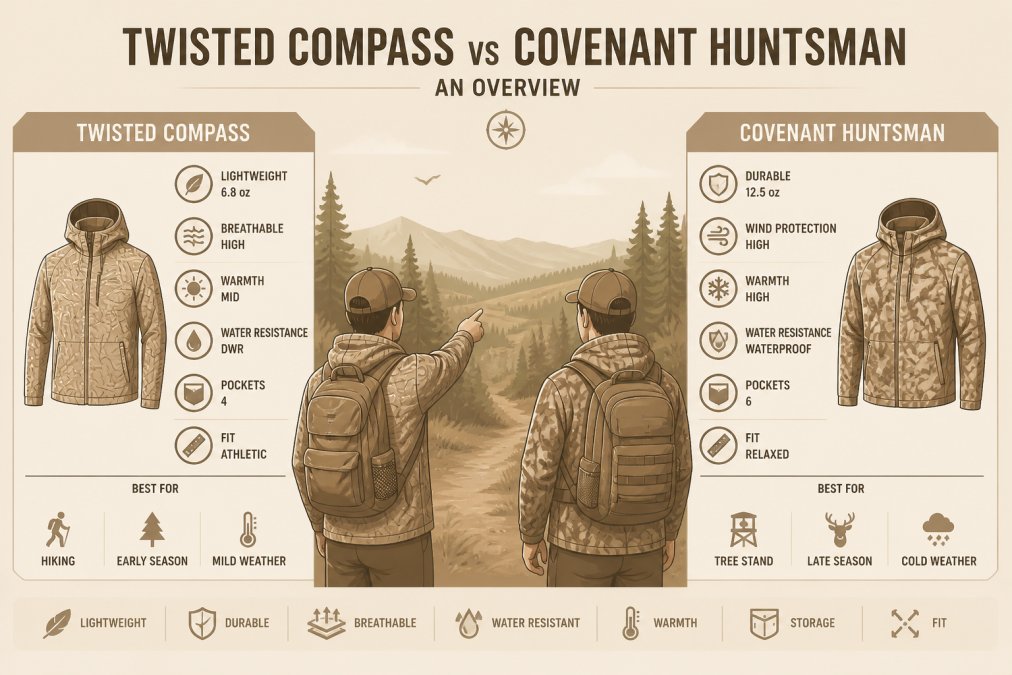
Feature Comparison Table: Camo, Warmth, and Weather Protection
Most pages that mention these two brands stop at vibes. This section does the opposite: it compares them on the attributes that actually decide whether a piece works in the field, and it flags where you should verify specs yourself before buying.
| Attribute | Twisted Compass | Covenant Huntsman |
|---|---|---|
| Primary identity | Hunting-first technical apparel | Faith-forward everyday outdoor wear |
| Camo approach | Pattern-driven, environment-specific camo | Camo plus solid colorways with faith-based graphics |
| Insulation strategy | Layering system: base, mid, shell | Mid-weight standalone layering |
| Weather protection | Dedicated weather-resistant outer layers | Weather resistance varies by piece; fewer hard shells |
| Fit philosophy | Athletic-leaning, closer to body | Relaxed and generous through chest and waist |
| Print and graphic method | Mixed; check per item | Graphic-heavy; screen print and DTG common |
| Best use case | Long sits, active stalks, variable weather | Casual hikes, daily wear, church-to-trailhead |
| Where to verify | Product page fabric and membrane callouts | Product page fabric weight and print method |
How to read this table. The single biggest practical difference is the shell. A hunting-first brand builds its line around an outer layer that blocks wind and sheds light precipitation, then expects you to add insulation underneath. A faith-forward brand often builds the garment itself to be the whole outfit, which is comfortable but leaves you exposed when weather turns.
What to check on any product page before you buy:
- Fabric weight, usually listed in grams per square meter (GSM) or ounces per square yard. Mid-weight fleece commonly lands in the 250-300 GSM range; lighter knits sit closer to 150-180 GSM.
- Membrane or coating language. Look for terms like "waterproof," "water-resistant," or a listed hydrostatic head rating. "Water-resistant" and "waterproof" are not interchangeable.
- Seam treatment. Taped seams matter more than a coating claim on a shell you plan to wear in steady rain.
- Print method. Screen print and direct-to-garment (DTG) generally outlast cheap heat transfers, which tend to crack first at the shoulders and chest.
- Return window. Confirm the policy before ordering, since fit is the most common reason these pieces get sent back.
Neither brand publishes a complete spec sheet on every item, so treat any single number you see in a review with caution. The reliable move is to compare fabric weight, membrane language, and seam treatment across the specific pieces you're considering, not across the brands as a whole.
Twisted Compass: Strengths, Weaknesses, and Best Use Cases
Twisted Compass leans toward the technical side of hunting apparel. The brand's camo pieces and weather-resistant outerwear suit hunters who spend long sits in variable conditions and want gear that disappears into the terrain. The trade-off is that the same design choices that help in the field make the line less useful as everyday wear.
Strengths:
- Camo built for specific environments. Pattern selection matters more than most buyers realize. A pattern with large, high-contrast shapes reads as a blob at distance; a pattern with finer, lower-contrast shapes breaks up your outline better in timber and brush. Twisted Compass leans toward the latter.
- Weather-resistant outer layers. A dedicated shell is the piece that earns its keep. Look for a membrane or coating callout plus taped seams, because a coating alone will wet out faster than a laminated membrane.
- Designs built around active hunting use. Articulated sleeves, gusseted underarms, and a hem that stays put when you raise a rifle are the small construction details that separate hunting apparel from a general outdoor jacket.
Weaknesses:
- Less emphasis on everyday, non-hunting wear. A technical shell with a camo pattern is hard to wear to the grocery store, and that's by design.
- Sizing skews athletic. If you're between sizes or broad through the chest and shoulders, size up rather than assuming the listed size will match a relaxed-fit brand.
- Fewer casual colorways. If you want one jacket for the trail and the coffee shop, this line will frustrate you.
Best for: Hunters who prioritize field performance over casual styling, and who are willing to build a layering system rather than buy a single do-everything jacket.
How to decide in one step: If your typical outing involves sitting still in cold, wet weather for more than an hour, the technical approach wins. If your typical outing is a 45-minute walk on a dry morning, you're paying for capability you won't use.
Covenant Huntsman: Strengths, Weaknesses, and Best Use Cases
Covenant Huntsman positions itself around faith and family, with apparel that works as well at church as it does at the trailhead. The brand's pieces tend to favor comfort and a relaxed fit over hardcore technical specs.
Strengths:
- Faith-forward designs that read as subtle, not preachy
- Comfortable, generous fit for everyday wear
- Versatile enough for casual hikes and daily life
Weaknesses:
- Fewer heavy-duty weatherproof options
- Camo selection is narrower than a dedicated hunting brand
Best for casual trail hikers and anyone who wants one wardrobe that covers both the outdoors and daily life.
Christian Outdoor Apparel: How Faith-Based Brands Compare
Christian outdoor apparel is clothing designed for outdoor use that also carries faith-based messaging, scripture references, or nature-inspired designs tied to a person's values. The category has grown as more shoppers want gear that matches both their hobbies and their beliefs.
Outdoor Industry Association participation trends
What separates the good brands from the forgettable ones isn't the message. It's the construction: fabric weight, stitch quality, and how the print holds up. A shirt with a great verse on it still has to survive a season of washes.
This is where Tortoise Trail Gifts fits in. Our collection focuses on comfortable tees, hoodies, and hats with nature-inspired, faith-based designs, built for people who want apparel that reflects a patient, purposeful lifestyle. We're not trying to out-camo a technical hunting brand. We're making gear for casual walks, birdwatching mornings, or weekends at the RV.
Hiking Shirts and Hoodies: Fit, Layering, and Durability
Hiking shirts and hoodies should fit close enough to layer but loose enough to move. That balance matters more than any single fabric claim.
A few practical rules we've learned from customer questions:
- Size up if you're between sizes and plan to layer a base tee underneath.
- Check the print method. Screen-printed and DTG designs hold up better than cheap heat transfers.
- Wash cold, inside out, and skip the dryer to keep prints from cracking.
- Look for armpit vents or breathable panels if you run warm on the trail.
Durability comes down to three things: fabric weight, stitch quality, and how you care for it. A mid-weight hoodie with reinforced seams will outlast a lighter one every time.
Outdoor Gifts for Hikers: Matching Gear to the Person
Outdoor gifts for hikers land best when they match how the person actually uses gear. A hardcore backcountry hunter and a casual birdwatcher need very different things, even if both love the outdoors.
Ask three questions before you buy:
- How often do they get out? Weekend warriors need versatile pieces, not expedition gear.
- What's their climate? Wet and cold calls for waterproof layers; dry and mild calls for breathable fabrics.
- Do they want gear that reflects their faith? If so, a faith-forward brand beats a generic outdoor label.
If you're unsure on size, a gift card or a hat is a safe bet. Hats fit almost everyone and let the recipient pick their own style.
Gift Ideas for Casual Trail Hikers: Simple, Useful Picks
Gift ideas for casual trail hikers should be simple, useful, and easy to size. Casual hikers, the birdwatchers, the nature-walkers, the RV travelers, don't need technical mountaineering gear. They need apparel that feels good and looks right on a short trail or a morning in the park.
Our picks for this crowd:
- A comfortable graphic tee with a nature-inspired design
- A mid-weight hoodie for cool mornings
- A hat for sun and light rain
- A small accessory that fits an existing pack
Tortoise Trail Gifts stocks tees, hoodies, and hats built for exactly this kind of use, with free shipping on orders $75+. If you're gift-shopping and unsure about fit, our return policy can assist if the size isn't right.
American Hiking Society trail and gear guidance
The hardest part of buying outdoor apparel isn't picking a brand. It's finding gear that fits your body, your climate, and your values without guessing on quality. At Tortoise Trail Gifts, we build faith-based apparel for people who want one wardrobe that works on the trail and in daily life, with nature-inspired designs, comfortable tees and hoodies, and a retirement and RV life collection for the travelers among us. Get started with Tortoise Trail Gifts and find apparel that fits the way you actually live.
Frequently Asked Questions
What is the difference between Twisted Compass and Covenant Huntsman?
Twisted Compass focuses on outdoor-inspired lifestyle apparel with a broad range of camo and solid-color options. Covenant Huntsman leans toward hunting-specific gear with an emphasis on field performance and weather resistance. The main differences come down to camo pattern selection, insulation options, pocket layouts, and how each brand handles sizing. Both offer faith-based messaging, but their design priorities diverge enough that your choice depends on whether you need dedicated hunting gear or versatile trail wear.
Are Twisted Compass and Covenant Huntsman faith-based brands?
Both brands incorporate faith-based themes into their branding and some designs, similar to how Christian outdoor apparel often blends nature imagery with scripture or inspirational messaging. The degree varies: some pieces are subtle enough for everyday wear, while others make the faith connection more explicit. If you want gear that reflects your values without feeling preachy, look for designs with small logos or nature-focused graphics rather than large text.
Which brand is better for a gift for a hiker?
It depends on the hiker's style. Someone who hunts regularly will get more use from Covenant Huntsman's field-oriented pieces, especially items with camo patterns and weather protection. A casual trail hiker or someone who wears outdoor apparel daily may prefer Twisted Compass for its broader lifestyle range. When buying outdoor gifts for hikers, check whether the recipient prioritizes technical performance or everyday comfort, and confirm the return policy before ordering if you are unsure about sizing.
What should I compare when choosing outdoor-themed apparel?
Start with fit and sizing charts, since outdoor brands often run differently from standard retail. Then check fabric weight and insulation for your expected hunting conditions, waterproofing or water resistance for weather protection, and pocket layout for gear access. Camo pattern matters if you hunt specific terrain. Also review durability details like stitching, zipper quality, and warranty coverage. Price and long-term value matter, but a cheaper piece that fails after one season costs more than a well-built option.
0 comments