

Table of Contents
- Why the Right Hiking Shirt Matters for Casual Nature Walks
- Best Shirts for Hiking: What to Look For
- Cotton vs. Polyester Hiking Shirts: Which Fabric Wins on Easy Trails?
- Moisture-Wicking Hiking Shirts: When You Actually Need Them
- Fit, Mobility, and Chafing Prevention on the Trail
- Casual Hiking Outfit Ideas for Every Season
- A Simple Buying Guide: Budget and Use-Case Comparison
- Conclusion: Dress for the Walk You're Actually Taking
- Frequently Asked Questions
Last Updated: October 17, 2026
Why the Right Hiking Shirt Matters for Casual Nature Walks
Most people overthink trail apparel. If your hiking is a two-mile loop through a county park or a flat woodland path on a Saturday morning, the shirt on your back matters more than the boots on your feet. A hiking shirt touches your skin for the entire walk and decides whether you finish comfortable or clammy. At Tortoise Trail Gifts, we build hiking shirts for exactly this kind of walking: unhurried, outdoors, and often shared with family.

The stakes are lower than a summit push, but not zero. A cotton tee that soaks through on a humid morning chills you the moment you stop moving, and a shirt that binds at the shoulders turns a stroll into a fidget-fest. Below, we break down fabrics, fits, and outfit choices so you can pick the right hiking shirts for casual nature walks without buying gear you will never use.
Best Shirts for Hiking: What to Look For
The best shirts for hiking on gentle terrain share four traits: breathable fabric, a relaxed cut, a color that hides trail dust, and a print you enjoy wearing. You do not need pit zips or a $90 technical shell for a nature walk.
Here is what actually earns its place in your drawer:
- Fabric weight: Lightweight cotton or a cotton-poly blend feels soft against skin and breathes on mild days.
- Fit: A unisex cut with room through the chest and shoulders lets you swing your arms freely.
- Color: Solid colors hide sweat and dirt better than pale pastels. Earth tones work well on the trail.
- Design: A graphic tee with a nature or hiking design adds personality without sacrificing comfort.
- Care:
Cotton vs. Polyester Hiking Shirts: Which Fabric Wins on Easy Trails?
For casual nature walks, the fabric question is not "which is best" but "which is best for this walk, this weather, and this body." The four fabrics you will actually encounter are cotton, polyester, merino wool, and blends. Each behaves differently when you sweat, stop moving, and start again.
Cotton is soft, breathable, and gets more comfortable with every wash, which is why most people reach for it on a mild-weather stroll. Its weakness is moisture: cotton fibers absorb sweat and hold it against your skin, so a soaked tee stays wet and conducts chill when you stop or a breeze picks up.
Polyester is hydrophobic: it does not absorb water the way cotton does, instead moving sweat to the surface where it evaporates faster. That is why it feels drier during activity and dries quickly after.
Merino wool is the fabric most casual walkers overlook. Fine-gauge merino is soft against skin, regulates temperature across a wider range than cotton, resists odor naturally, and insulates even when damp. It dries more slowly than polyester but far faster than cotton. The drawbacks are price and durability: merino costs more per shirt and can pill or develop holes with rough use.
Blends split the difference. A cotton-poly blend gives you cotton's softness with faster drying. Blends are usually the most forgiving choice for walkers who do not want to think hard about fabric.
| Fabric | Best For | Dries Fast | Feels Soft | Odor Resistance | Watch Out For |
|---|---|---|---|---|---|
| 100% cotton | Mild, dry weather; short walks | No | Yes | Low | Holds sweat and chill |
| Polyester | Warm, humid days; faster pace | Yes | Sometimes | Low unless treated | Can feel slick; retains odor |
| Merino wool | Cool-to-mild walks; multi-season use | Moderate | Yes (fine gauge) | High | Higher price; can pill |
| Cotton-poly blend | Most casual walks | Partly | Yes | Low | Slightly less breathable |
| Merino-synthetic blend | Variable weather; travel | Yes | Yes | High | Higher price |
A practical way to decide: if you walk in dry, mild conditions and stop rarely, cotton is fine. If you sweat easily or walk in humidity, choose polyester or a wicking blend. If you want one shirt that handles a cool start and a warm finish without smelling after one wear, merino or a merino blend is worth the extra cost.
Moisture-Wicking Hiking Shirts: When You Actually Need Them
Moisture-wicking hiking shirts earn their price when you sweat enough to soak a cotton tee. On a flat walk in cool weather, they are optional. On a humid summer morning or a steady uphill stretch, they change the experience.
Wicking fabric pulls moisture off your skin and spreads it across the shirt's surface, where it evaporates faster. The result feels drier and keeps you warmer when you pause to rest. If you walk in heat, walk at a brisk pace, or stop often to look at birds and plants, a wicking layer is worth owning.
The catch: many wicking shirts are cut slim and styled for performance. If you want a shirt that works on the trail and at the grocery store, look for a relaxed fit in a wicking blend rather than a race-cut jersey.
Fit, Mobility, and Chafing Prevention on the Trail
Fit causes more trail discomfort than fabric. Too tight restricts your arm swing and pulls across the back; too loose bunches under a daypack and catches on branches.
Start with the shoulder test. Raise both arms overhead. If the hem climbs past your waistband or the fabric pulls tight across your chest, size up. Next, check the underarm: a seam that digs into your armpit will chafe within a mile.
Chafing usually starts at three points: the underarm seam, the side seam under a pack strap, and the waistband where the shirt tucks in. If you are prone to rubbing, a looser cut helps more than any fabric upgrade.
Sizing deserves a straight answer. Many brands claim to run up to XL but cut tight through the chest. Check the size chart against a shirt you already own and love, and read reviews that mention fit. When in doubt on a unisex cut, size up one.
Casual Hiking Outfit Ideas for Every Season
Layering solves most seasonal problems, but the layer that matters most on a casual nature walk is the one against your skin.
Tortoise Trail Mountain T-Shirt – Mountain Hiking Graphic Tee, Unisex →
Spring (roughly 45-65°F): Mornings run cool and afternoons warm up fast, so start with a mid-weight cotton or merino tee, add light joggers or hiking pants, and carry a packable rain shell.
Summer (roughly 70-90°F): A single lightweight tee in a light color, shorts, a wide-brim hat, and sunscreen. Choose breathable cotton for dry heat or a wicking blend for humidity.
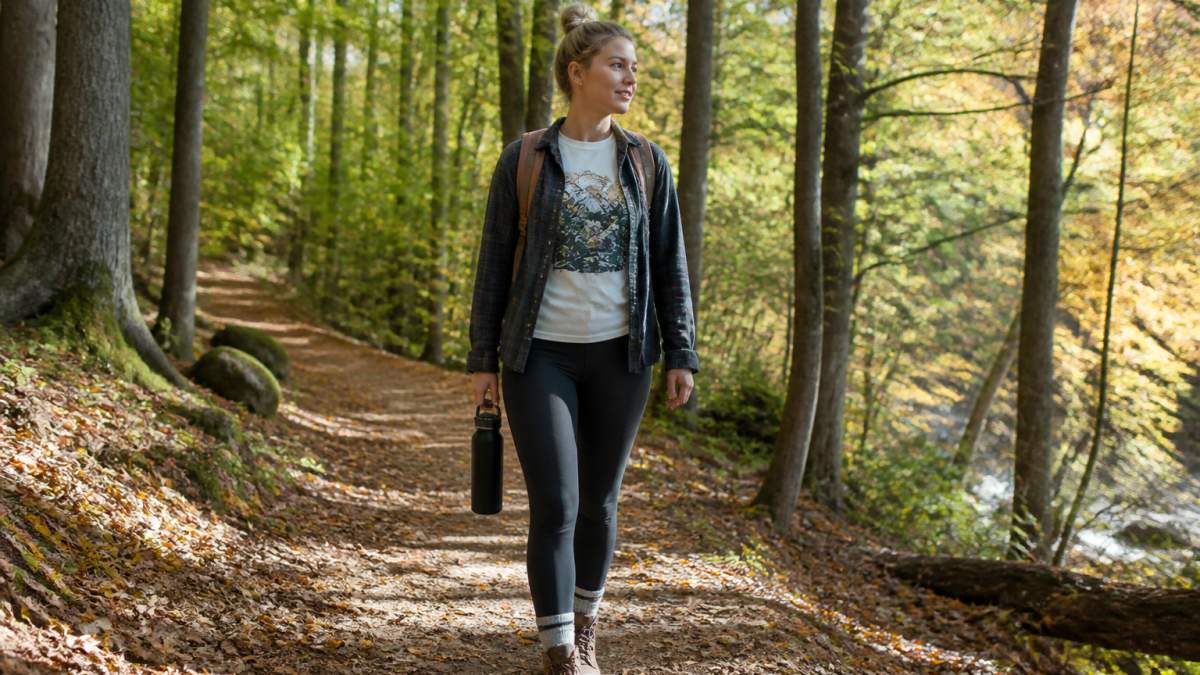
Fall (roughly 50-70°F): A graphic tee under an open flannel or light fleece, plus a beanie for early starts. This is when a favorite hiking design gets the most wear, since the tee is visible under an open layer.
Winter (roughly 25-45°F): A thin cotton or merino tee as a base under a fleece and a wind-resistant outer layer. Keep the base thin so you do not overheat once you start moving; vent heat through layers you can open or remove rather than wearing one thick shirt.
Sun and insect protection, season by season: In spring and summer, ticks and mosquitoes are active in brushy or wooded areas. Light-colored long sleeves and pants make ticks easier to spot and reduce exposed skin, and insect repellent applied to clothing rather than skin lasts longer and avoids reapplication on sweaty arms.
A simple layering rule for any season: start slightly cool, because you will warm up within the first ten minutes of walking. If you are comfortable standing in the parking lot, you are probably overdressed for the trail.
A Simple Buying Guide: Budget and Use-Case Comparison
Match the shirt to the walk, not to a gear catalog. Most casual walkers need two or three shirts, not ten.
Use this framework to decide:
- Short neighborhood walks and bird watching: one or two soft cotton graphic tees. Comfort first, technical features optional.
- Weekly park loops in warm weather: add one moisture-wicking shirt for humid days.
- Mixed trail and everyday wear: choose solid colors and subtle nature designs that work in both settings.
- Gifting: a unisex graphic tee in a classic fit is the safest choice when you do not know the recipient's size well.
Our own hiking shirts run $29.99 across the collection, including the Tortoise Trail Mountain T-Shirt and the Desert Sunset T-Shirt. Both are soft, breathable cotton in a casual unisex cut and hold up as everyday wear between walks. The Find Your Pace T-Shirt and Life Is Better Outside T-Shirt round out the lineup in the same fabric and fit.


For sizing guidance and fabric care, the American Apparel & Footwear Association publishes consumer resources on apparel labeling, and the Federal Trade Commission's textile labeling guidance explains what fiber content and care claims on a shirt tag legally mean.
Conclusion: Dress for the Walk You're Actually Taking
The gap between a good walk and a miserable one is usually one bad layer. Buy for the trail you actually walk, not the one in the gear catalog, and two comfortable shirts will out-earn a closet full of technical gear.
At Tortoise Trail Gifts, our nature-inspired tees are built for exactly that kind of walking: soft cotton, a relaxed unisex fit, and designs that celebrate the outdoors and the faith that carries you through it. Every order over $75 ships free.
Frequently Asked Questions
What kind of shirt is best for a casual hike?
For short, low-effort nature walks, a soft cotton T-shirt is often the most comfortable choice. It breathes well in mild weather and feels good against the skin. If you expect sweat, humidity, or a faster pace, a moisture-wicking synthetic or blend shirt dries quicker and reduces that clammy feeling. The best hiking shirts balance fabric, fit, and how long you plan to be out. For most casual walks under two hours, a well-fitting cotton graphic tee works fine.
Are cotton shirts okay for easy hikes?
Yes, for easy hikes in mild, dry conditions, cotton is perfectly fine. It is soft, breathable, and comfortable for casual wear. The main drawback is that cotton holds moisture, so it stays damp if you sweat heavily or get caught in rain, which can leave you chilled. On short nature walks with little elevation gain, that is rarely a problem. Save the moisture-wicking hiking shirts for hotter days, longer routes, or wet weather.
Should a hiking shirt fit loosely or snugly?
A relaxed, slightly loose fit works best for casual nature walks. It gives your arms and shoulders room to move, lets air circulate, and reduces rubbing at the seams. Avoid shirts that are tight across the chest or bind under the arms, since that is where chafing starts. If you are between sizes, size up for walking comfort. Tortoise Trail's unisex tees are cut for a casual fit, so check the size chart before ordering.
How do you dress in layers for a casual hike?
Start with a breathable base layer, such as a cotton or moisture-wicking T-shirt. Add a light mid-layer like a hoodie or flannel for cooler mornings, then a packable shell for wind or rain. As you warm up, peel layers off and tie them around your waist or stash them in a daypack. For short walks, two layers are usually enough. The goal is to stay dry and adjust quickly rather than carry heavy gear.
If your next walk deserves a shirt that feels as good as the trail looks, start with our hiking collection. Browse the Tortoise Trail Mountain T-Shirt or explore the full lineup of faith-based, nature-inspired apparel at Tortoise Trail Gifts and find the fit that moves with you.
0 comments